


Benefits of Using a Connector With a Glass Dielectric
Using a connector with a glass dielectric comes with many benefits, such as:
Rotational Captivation: The glass fused on the pin prevents rotation, protecting the solder joint's integrity.
Tight Concentricity of Center Contact: Fixture tolerances are held to tight tolerances.
Center Contact Retention: In the axial direction of the connector, the pin is securely held within the glass, preventing variation in pin-to-board height and mating dimensions.
Reflow Stable: Glass has a higher melt temperature and lower C.T.E than other commonly used materials, allowing it to prevent mechanical warping during the reflow cycle.
SV utilizes glass as a dielectric in two NPIs to address specific issues: PCB trace damage and mechanical warping during reflow. Learn more about these NPIs below.
Prevent PCB Trace Damage:
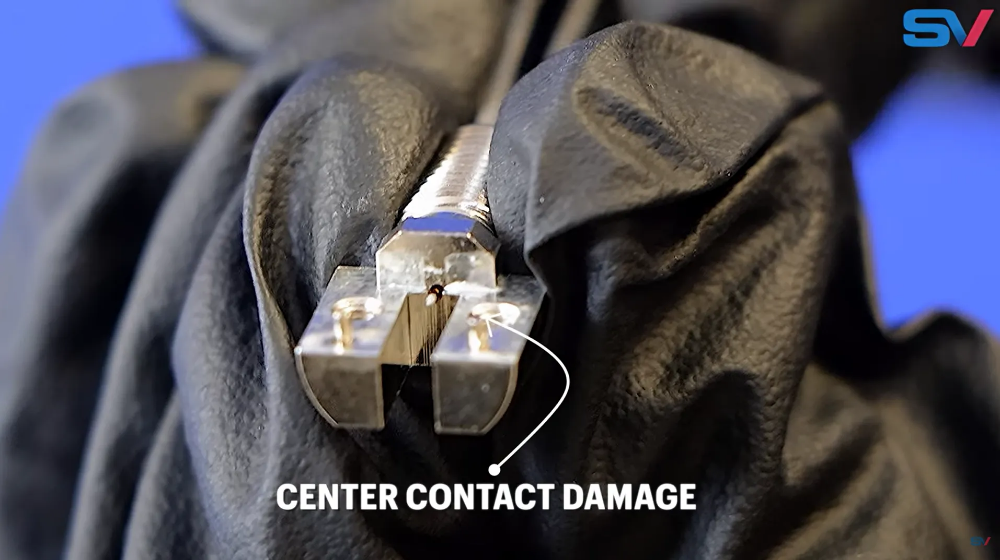
High-performance edge-launch connectors rely on small-diameter center contacts for optimal transitions. This contact is captured in plastic and can rotate within it when torqued down during mating, typically by the mating center contact.
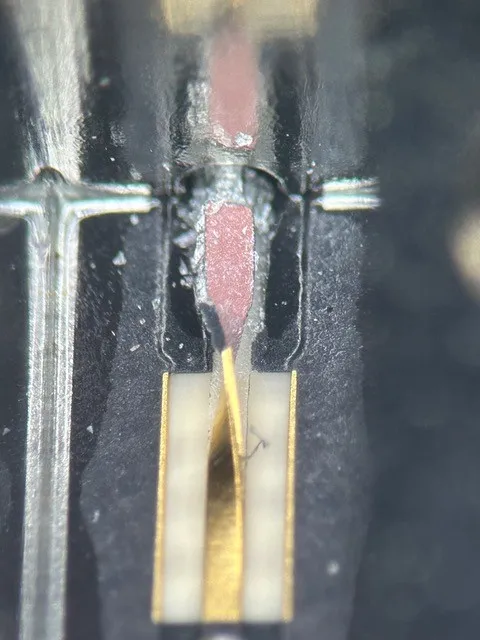
If the center contact on the edge launch is already soldered to the board and rotates, it will rip the trace off the board, so it can keep spinning.
SV Microwave’s TraceGuard Edge Launch RF PCB Connectors, formally known as our Torque Resistant Edge Launch RF PCB Connectors, have an innovative design that increases the rotational captivation of the center contact with a two-part contact assembly and glass seal captivation.
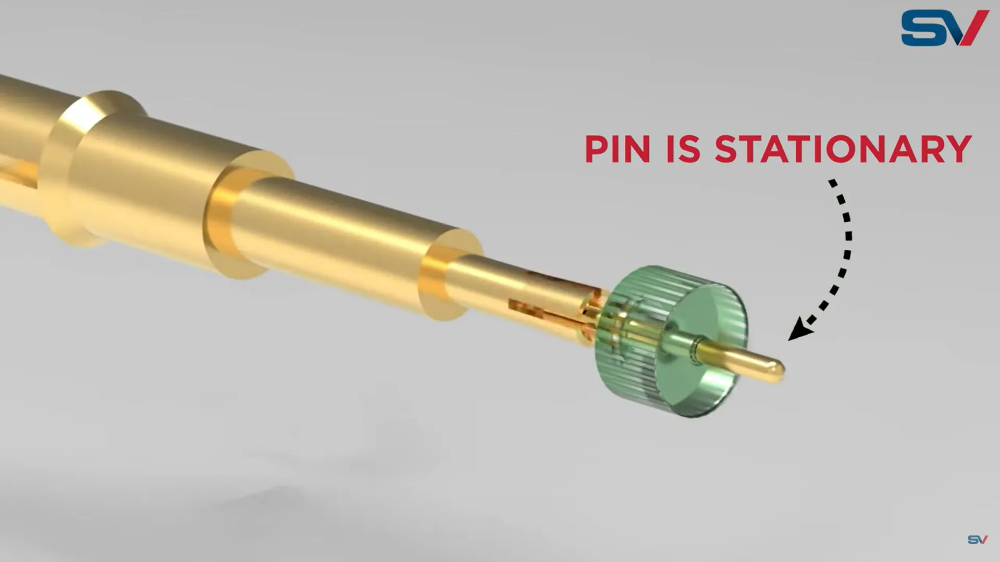
This fixes the soldered contact within the glass, therefore isolating any motion being transferred to the soldered connection and preventing damage to the PCB trace.
Resources:
Reflow Stable RF Connectors
During the solder reflow cycle, connectors with a PTFE dielectric are at risk of warping and popping off the board. The solder reflow oven temperature profile for Sn96 solder, one of the higher-temperature solder types, reaches around 250°C, nearing the melt temperature of PTFE. This makes PTFE prone to warping. This can cause connectors to “pop” off the boards, affecting signal integrity and requiring expensive rework/product replacements.
SV Microwave uses glass as a dielectric in our Reflow Stable PCB Connectors, as it has a melting temperature of approximately 1068°C, far higher than PTFE’s range of 315-399°C. This allows the connector to survive multiple reflow cycles.
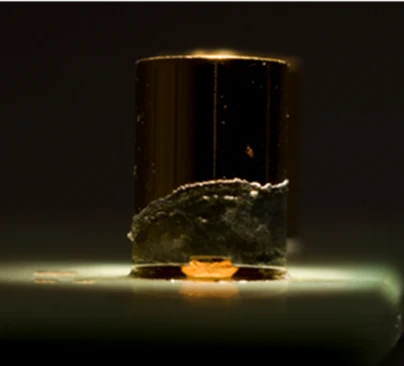
PCB Connector with PTFE tilting and lifting off the board during solder reflow
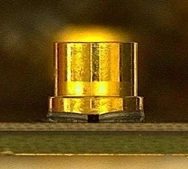
Reflow Stable PCB Connector during reflow. The connector stays firmly on the board
To further explore why using glass rather than PTFE is important when connectors need to withstand a solder reflow oven, we also need to evaluate dielectric materials.
The coefficient of thermal expansion (CTE) of Kovar and Corning 7070 Glass, the materials used in our Reflow Stable Connectors, are closely matched, unlike the more varied CTE of PTFE. Similar CTEs mean minimal damage during heating as both materials expand and contract at comparable rates. PTFE expands more than the Beryllium Copper body due to their varying CTEs, causing more damage.
Resources:
Want to Learn More? Contact our Experts!
Have any questions or want to learn more? Contact our team of engineers at applications@svmicro.com
recent releases
Benefits of Using a Connector With a Glass Dielectric
Using a connector with a glass dielectric comes with many benefits, such as:
Rotational Captivation: The glass fused on the pin prevents rotation, protecting the solder joint's integrity.
Tight Concentricity of Center Contact: Fixture tolerances are held to tight tolerances.
Center Contact Retention: In the axial direction of the connector, the pin is securely held within the glass, preventing variation in pin-to-board height and mating dimensions.
Reflow Stable: Glass has a higher melt temperature and lower C.T.E than other commonly used materials, allowing it to prevent mechanical warping during the reflow cycle.
SV utilizes glass as a dielectric in two NPIs to address specific issues: PCB trace damage and mechanical warping during reflow. Learn more about these NPIs below.
Prevent PCB Trace Damage:
High-performance edge-launch connectors rely on small-diameter center contacts for optimal transitions. This contact is captured in plastic and can rotate within it when torqued down during mating, typically by the mating center contact.
If the center contact on the edge launch is already soldered to the board and rotates, it will rip the trace off the board, so it can keep spinning.
SV Microwave’s TraceGuard Edge Launch RF PCB Connectors, formally known as our Torque Resistant Edge Launch RF PCB Connectors, have an innovative design that increases the rotational captivation of the center contact with a two-part contact assembly and glass seal captivation.
This fixes the soldered contact within the glass, therefore isolating any motion being transferred to the soldered connection and preventing damage to the PCB trace.
Resources:
Reflow Stable RF Connectors
During the solder reflow cycle, connectors with a PTFE dielectric are at risk of warping and popping off the board. The solder reflow oven temperature profile for Sn96 solder, one of the higher-temperature solder types, reaches around 250°C, nearing the melt temperature of PTFE. This makes PTFE prone to warping. This can cause connectors to “pop” off the boards, affecting signal integrity and requiring expensive rework/product replacements.
SV Microwave uses glass as a dielectric in our Reflow Stable PCB Connectors, as it has a melting temperature of approximately 1068°C, far higher than PTFE’s range of 315-399°C. This allows the connector to survive multiple reflow cycles.
PCB Connector with PTFE tilting and lifting off the board during solder reflow
Reflow Stable PCB Connector during reflow. The connector stays firmly on the board
To further explore why using glass rather than PTFE is important when connectors need to withstand a solder reflow oven, we also need to evaluate dielectric materials.
The coefficient of thermal expansion (CTE) of Kovar and Corning 7070 Glass, the materials used in our Reflow Stable Connectors, are closely matched, unlike the more varied CTE of PTFE. Similar CTEs mean minimal damage during heating as both materials expand and contract at comparable rates. PTFE expands more than the Beryllium Copper body due to their varying CTEs, causing more damage.
Resources:
Want to Learn More? Contact our Experts!
Have any questions or want to learn more? Contact our team of engineers at applications@svmicro.com