


Operation Airdrop - SV’s Sales Meeting Takes Flight
As part of the annual SV Sales Meeting, we run an activity that gives our sales representatives and distributors hands-on experience with our products. During this activity, they learn about new products, use our marketing materials, work directly with our engineers, and think like our customers. It is also a team activity that adds some challenge and pressure. At the same time, it helps our design and applications engineers better understand how customers use our parts in larger systems.
During this year’s meeting, we launched a high-altitude balloon. The balloon carried a payload with a camera and an amateur radio transmitter, built using SV connectors and cable assemblies. Notably, our UltraLite line of cable connectors, which are 30% lighter than their stainless steel counterparts, and our LiteTouch Solderless PCB Connectors, which have a proven heritage and simplify board assembly. A Raspberry Pi single-board computer controlled the transmitter (DRA-818V). Images were captured with a Raspberry Pi camera, converted to Slow Scan Television (SSTV) audio, and transmitted on the 2m amateur radio band. Also included in the payload was a GPS receiver; the location and altitude data were used to generate an AX.25 packet, which was sent over the air using APRS.
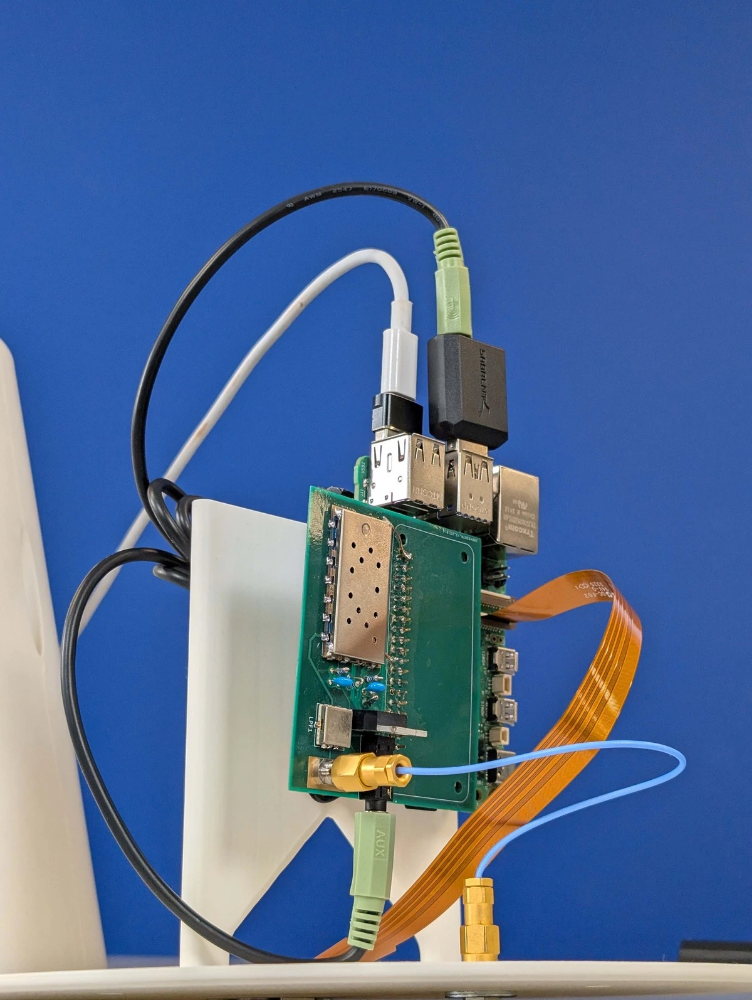
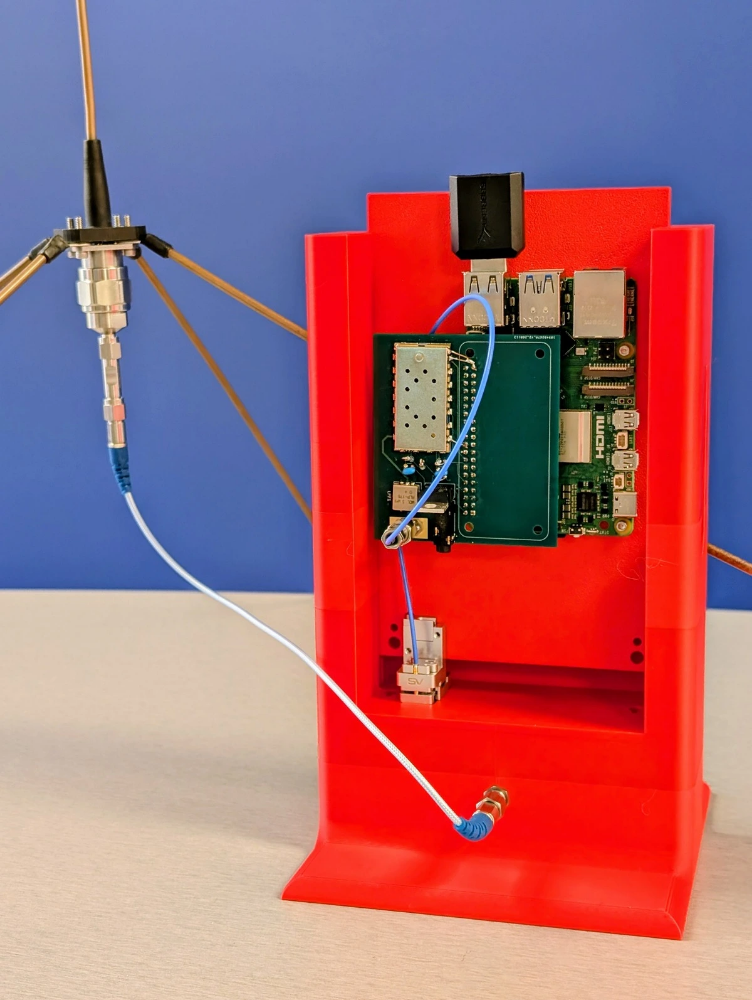
Meanwhile, on the ground, sales reps and distributors help assemble the ground-station receivers. The hardware stack is identical to the flight hardware except that there is no GPS module. As part of the activity and learning exercise, the coax connections were made using SOSA-compliant VITA modules and various other SV microwave products. The SSTV audio transmissions were received and decoded to reconstruct the images taken by the payload.
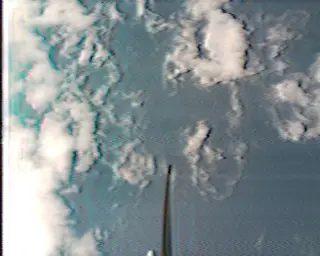
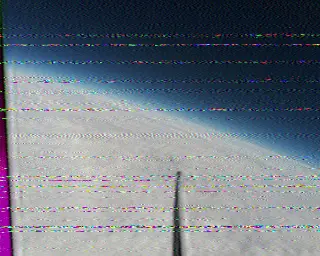
Flight conditions were less than ideal, with a lot of cloud cover on the day of, but we were still able to get some nice images. The black object at the bottom of the frame is the antenna. We estimate the balloon reached 90,000 feet (near the edge of space) in the final image, after approximately one hour of flight.
This activity was a lot of fun to put together, and it was really amazing to receive images from the edge of the atmosphere. I’m not sure what we are going to do next year, but it's going to be hard to top this. Thank you to all the folks who helped make this happen.
recent releases
Operation Airdrop - SV’s Sales Meeting Takes Flight
As part of the annual SV Sales Meeting, we run an activity that gives our sales representatives and distributors hands-on experience with our products. During this activity, they learn about new products, use our marketing materials, work directly with our engineers, and think like our customers. It is also a team activity that adds some challenge and pressure. At the same time, it helps our design and applications engineers better understand how customers use our parts in larger systems.
During this year’s meeting, we launched a high-altitude balloon. The balloon carried a payload with a camera and an amateur radio transmitter, built using SV connectors and cable assemblies. Notably, our UltraLite line of cable connectors, which are 30% lighter than their stainless steel counterparts, and our LiteTouch Solderless PCB Connectors, which have a proven heritage and simplify board assembly. A Raspberry Pi single-board computer controlled the transmitter (DRA-818V). Images were captured with a Raspberry Pi camera, converted to Slow Scan Television (SSTV) audio, and transmitted on the 2m amateur radio band. Also included in the payload was a GPS receiver; the location and altitude data were used to generate an AX.25 packet, which was sent over the air using APRS.
Meanwhile, on the ground, sales reps and distributors help assemble the ground-station receivers. The hardware stack is identical to the flight hardware except that there is no GPS module. As part of the activity and learning exercise, the coax connections were made using SOSA-compliant VITA modules and various other SV microwave products. The SSTV audio transmissions were received and decoded to reconstruct the images taken by the payload.
Flight conditions were less than ideal, with a lot of cloud cover on the day of, but we were still able to get some nice images. The black object at the bottom of the frame is the antenna. We estimate the balloon reached 90,000 feet (near the edge of space) in the final image, after approximately one hour of flight.
This activity was a lot of fun to put together, and it was really amazing to receive images from the edge of the atmosphere. I’m not sure what we are going to do next year, but it's going to be hard to top this. Thank you to all the folks who helped make this happen.